PART OF NEW MEXICO'S LITERARY HERITAGE FOR SEVENTY YEARS
Lakota Women's Arts
Quillwork and Beadwork
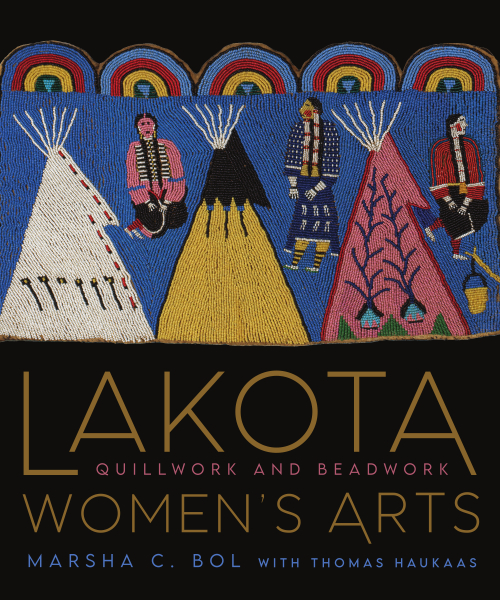
Much has been written about Lakota Sioux Indian men and their arts, especially those made in support of their hunting and warrior culture. Historically, however, very little scholarship has addressed Lakota women and their art forms. This lack of attention is still true today, even though the Lakota Sioux are the best-known of the Plains Indian tribal nations and their traditional regalia is widely recognized. These are the people of Chiefs Crazy Horse, Red Cloud, and Sitting Bull and of the infamous Battles of the Little Big Horn and Wounded Knee. In Lakota Women’s Arts, Marsha C. Bol gives recognition to the significant contributions made by Lakota women—particularly through their quillwork and beadwork embroidery—in supporting and maintaining the foundational values of traditional Lakota society. The author explores the underlying motivations that have impelled Lakota women to practice these arts over many centuries, with particular focus on the decades since 1820. To explicate the values expressed in these artforms, Bol gives primacy to first-person voices from members of the Lakota Nation, past and present. In addition to presenting an astonishing array of historic and contemporary Lakota art made by both women and men, this lavishly illustrated volume will provide today’s Lakota artists unprecedented access to historical examples of quill- and beadwork that are tucked away in museums and private collections. As Rosalie Little Thunder notes, “Lakota people must have the chance to see these [historic Lakota] things as a way of knowing where they’ve been so that they would know where to go.”
PROMO. Enter code at checkout to receive the sale price.
Reviews
In the introduction, you mention that this project really began in the 80s. What was the origin story? Did you already have in mind the gorgeous tome that Lakota Women’s Arts has become?
When I entered the Ph.D. program in Native Art History at UNM in the 1980s, I was astonished by the beautiful geometric patterns in the Plains Indian women’s quill and beadwork. As I determined to learn more about these objects, I found there was little published information about the women’s arts while a great deal was written about the Plains men as warriors and hunters. I was intrigued by the different artistic styles and media used by the two genders – geometric designs for women in bead and quillwork as opposed to representational drawing and painting by the men - which seemed to be a strict division of labor according to gender. This led me to pursue the topic of gender roles in the arts for my dissertation. I chose to focus on the Lakota people, who had been prolific makers of art, limiting myself to their historic artistry from 1820 to 1920.
-